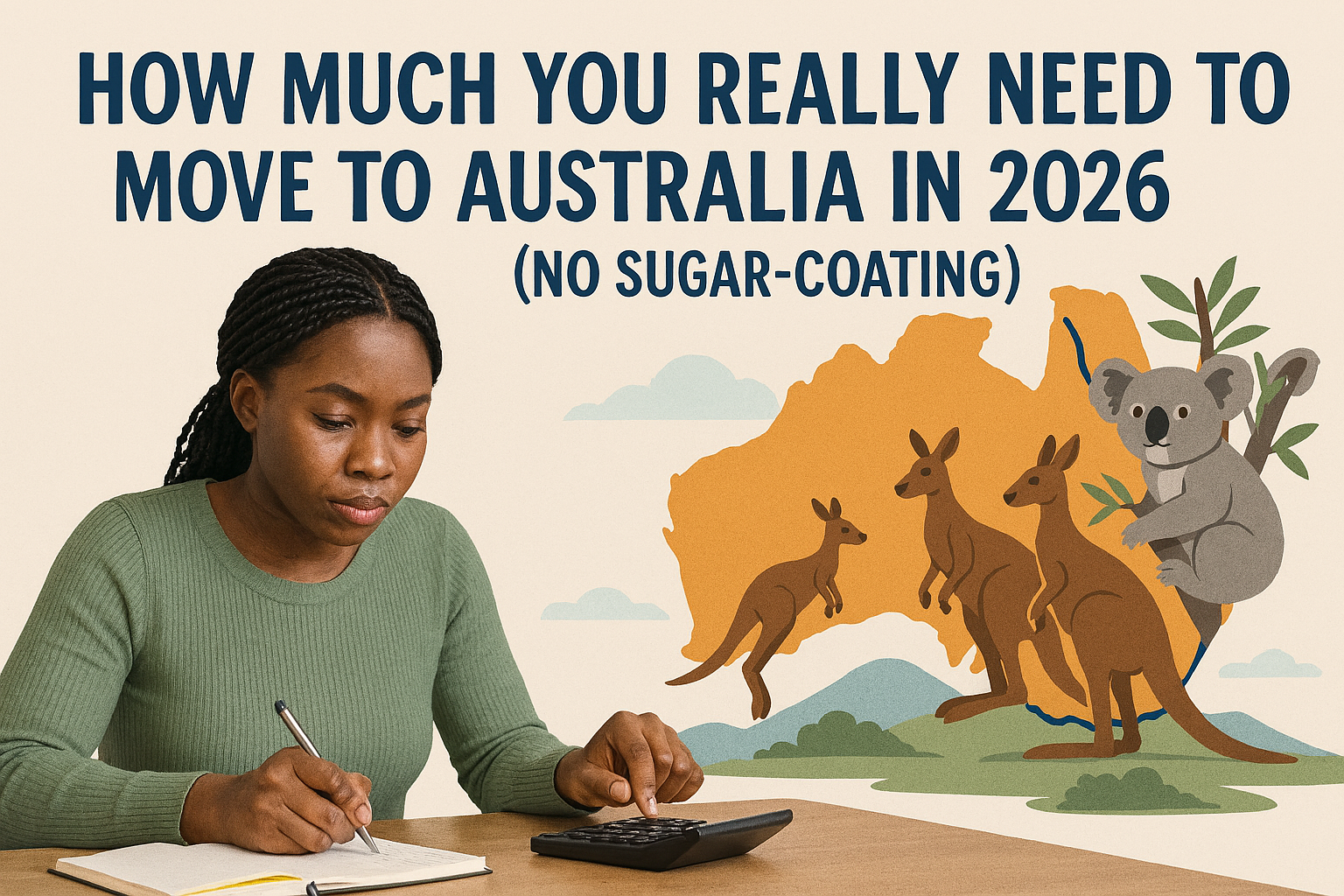
Moving to Australia in 2026? Before booking your flight, find out how much money you realistically need for accommodation, rent, transport, groceries, emergencies and the first few months of settling in.
The internet loves selling the dream of moving to Australia.
Endless beaches. Higher wages. Better weather. A relaxed lifestyle. Better opportunities for you and your family.
But what many relocation articles conveniently leave out is that Australia has become an expensive country to move to, particularly if you’re arriving without a confirmed job, family support or substantial savings.
Getting your visa approved is one thing. Actually establishing yourself financially in Australia is another.
If you’re planning to relocate in 2026, this is the financial reality check you need before making the move.
No fantasy budgets. No unrealistic promises about surviving on instant noodles. Just a practical breakdown of what it could cost.
Let’s talk about how much money you should have before boarding that plane.
1. The Biggest Mistake People Make When Budgeting for Australia
One of the biggest mistakes prospective migrants make is calculating only the obvious relocation expenses.
They think about:
-
Visa application fees.
-
International flight tickets.
-
First month’s rent.
-
A little money for food.
Then they arrive in Australia and discover that money disappears much faster than expected.
There are several expenses that can hit almost immediately:
-
Rental bond and advance rent.
-
Temporary accommodation while searching for a permanent home.
-
Furniture and household essentials.
-
Public transport or vehicle expenses.
-
Mobile phone plans and internet.
-
Groceries and basic necessities.
-
Electricity and other utility connections.
-
Unexpected medical or personal expenses.
-
Delays in finding suitable employment.
The biggest financial challenge is that many of these expenses arrive before you’ve earned your first Australian dollar.
Therefore, the question isn’t simply:
How much does it cost to move to Australia?
The more important question is:
How much money do I need to avoid running into financial trouble three months after arriving?
Let’s examine different relocation scenarios.
2. Scenario One: Moving to Australia on a Bare-Minimum Budget
This scenario is for someone who already has an approved visa and a confirmed job waiting for them in Australia.
Having employment secured significantly reduces the financial risk because you already have an expected source of income.
However, you still need enough money to cover your initial expenses.
Estimated relocation budget for one person
| Expense | Estimated Cost (AUD) |
|---|---|
| International flight | $1,000–$2,500 |
| Temporary accommodation | $1,500–$3,000 |
| Rental bond and initial rent | $2,000–$4,500 |
| Transport setup | $200–$500 |
| Basic furniture and household items | $500–$1,500 |
| Emergency savings | $3,000 |
| Estimated Total | $8,200–$15,000 |
Estimated minimum budget: $8,000–$15,000 AUD.
Can you move with less money? Technically, yes.
Would I recommend it? Probably not.
This budget leaves very little room for unexpected situations, including:
-
Your employer delaying your start date.
-
Struggling to secure a rental property.
-
Having to extend temporary accommodation.
-
Unexpected medical expenses.
-
Flight changes or emergencies.
-
Additional relocation expenses.
One unexpected problem could significantly affect your financial position.
This is a survival budget, not a comfortable relocation budget.
3. Scenario Two: What a More Comfortable Relocation Budget Looks Like
This is where things become more realistic.
Let’s assume you’re a single professional relocating to Australia with reasonable employment prospects but still need time to settle into your new environment.
You want enough money to secure accommodation, purchase essentials, cover living expenses and have something left over for emergencies.
Estimated relocation budget for one person
| Expense Category | Estimated Cost (AUD) |
|---|---|
| International flights | $1,500–$3,000 |
| Accommodation setup | $5,000–$8,000 |
| Living expenses for three months | $6,000–$10,000 |
| Emergency savings | $5,000–$8,000 |
| Estimated Total | $17,500–$29,000 |
Recommended budget: $18,000–$30,000 AUD.
With this amount, you have considerably more financial flexibility.
You can:
-
Take your time finding suitable accommodation.
-
Purchase essential furniture and household items.
-
Manage your living expenses while settling in.
-
Handle unexpected expenses without immediately panicking.
-
Avoid accepting the first available job simply because you desperately need money.
Having a financial cushion gives you something extremely valuable when relocating: time.
And time can make a significant difference when establishing yourself in a new country.
4. Scenario Three: Moving to Australia Without a Job

This is where the financial risks increase considerably.
If you’re moving to Australia without confirmed employment and planning to search for work after arrival, you need to prepare for the possibility that finding a job could take longer than expected.
Many prospective migrants assume:
I’ll arrive, update my resume and get a job within two or three weeks.
Sometimes that happens.
Other times, the process takes several months.
Depending on your profession, you may need qualification assessments, professional registration, licensing, local experience or multiple interview rounds.
Three months without income can easily become six.
Recommended savings when arriving without employment
| Household Type | Recommended Savings (AUD) |
|---|---|
| Single person | $25,000–$40,000 |
| Couple | $35,000–$60,000 |
| Family with children | $60,000–$120,000+ |
These figures might initially seem excessive.
However, consider the expenses involved:
-
Rent and accommodation.
-
Groceries and household supplies.
-
School-related expenses.
-
Childcare.
-
Healthcare and insurance where applicable.
-
Transportation.
-
Mobile phones and internet.
-
Unexpected personal expenses.
When there’s no regular income coming in, even ordinary household expenses can become financially stressful.
My advice: If you intend to move to Australia without a job, prepare for at least three to six months of living expenses rather than assuming you’ll find employment immediately.
5. The Australian Rental Market Shock

Accommodation is one of the biggest financial challenges facing new migrants.
Many people underestimate how much money they need before they can even move into a permanent home.
In many Australian rental markets, competition is strong, and newcomers can face additional difficulties because they may not have:
-
Australian rental history.
-
Local employment records.
-
Previous Australian landlord references.
-
Established income documentation.
Even if you have enough money, securing a suitable property can take time.
What should you budget for?
Typical upfront rental expenses can include:
| Expense | Description |
|---|---|
| Rental bond | Security deposit, subject to state or territory rules |
| Advance rent | Rent payable before or when moving in |
| Temporary accommodation | Hotel, Airbnb or short-term rental |
| Moving expenses | Transporting personal belongings |
| Utility connections | Electricity, gas and internet |
| Household essentials | Furniture, kitchenware and bedding |
Depending on the property, location and household size, a newcomer could easily spend $3,000–$8,000 AUD getting established in accommodation.
Families may need considerably more.
Remember that rental bond and advance rent requirements differ between Australian states and territories. You should check the applicable rules before preparing your relocation budget.
6. Sydney vs Melbourne vs Brisbane vs Perth: Which City Is More Affordable?
Where you choose to settle can make a substantial difference to your relocation expenses.
Australia is a large country, and the cost of housing, transport and everyday living varies significantly between cities.
Let’s look at four popular destinations.
Sydney
The expensive option.
Sydney is one of Australia’s most expensive cities, particularly when it comes to housing.
Newcomers should prepare for higher expenses involving:
-
Residential rent.
-
Property deposits.
-
Parking.
-
Dining out.
-
General accommodation costs.
Sydney can offer excellent employment opportunities, but your salary needs to be considered alongside the cost of living.
Melbourne
A major employment and lifestyle destination.
Melbourne offers a broad employment market and a diverse range of residential suburbs.
Although it can be less expensive than Sydney in some housing markets, it is still a costly city to establish yourself in.
Your preferred suburb can make a significant difference to your budget.
Brisbane
No longer the bargain it used to be.
Brisbane has traditionally attracted migrants looking for a more affordable alternative to Sydney and Melbourne.
However, housing costs have increased substantially over recent years.
It can still offer a more affordable lifestyle than Sydney in many circumstances, but newcomers should not assume that accommodation will be cheap.
Perth
Worth considering for employment and lifestyle.
Perth can offer an attractive balance between employment opportunities, housing and lifestyle, depending on your profession and preferred location.
It is particularly worth investigating if you work in:
-
Mining.
-
Engineering.
-
Construction.
-
Skilled trades.
-
Resources and related industries.
However, employment opportunities and housing availability should be assessed before making a decision.
Important: The cheapest city isn’t necessarily the best city. Consider your employment prospects, accommodation costs and transport requirements together.
7. Hidden Costs Nobody Warns You About
The obvious relocation expenses are only part of the story.
There are several smaller costs that can add up to thousands of dollars during your first few weeks in Australia.
A. Replacing Household Items
Even if you ship some personal belongings from your home country, you’ll probably need to purchase additional items.
These may include:
-
Beds and mattresses.
-
Kitchen utensils.
-
Cooking appliances.
-
Bedding and towels.
-
Cleaning equipment.
-
Clothing.
-
Power adapters.
-
General household essentials.
A reasonable initial allowance could be $1,000–$5,000 AUD, depending on your household size and what you bring with you.
B. Transportation
Your transportation expenses will depend heavily on where you decide to live.
Some Australian cities and suburbs have relatively good public transport connections.
Others are much easier to navigate with a personal vehicle.
If you decide to purchase a car, remember to budget for:
-
Vehicle purchase.
-
Registration.
-
Compulsory insurance where applicable.
-
Additional insurance.
-
Fuel.
-
Servicing and maintenance.
-
Parking.
Buying a vehicle can significantly increase your initial relocation expenses.
Do not make the mistake of budgeting only for the purchase price.
C. Delayed Employment
This is arguably one of the most dangerous financial mistakes new migrants make.
You might assume that finding employment will be straightforward.
However, the actual process can involve:
-
Updating your qualifications.
-
Having overseas qualifications assessed.
-
Obtaining professional licences.
-
Completing local certifications.
-
Attending multiple interviews.
-
Waiting for background checks and employment approvals.
Even experienced professionals can encounter delays.
Your relocation budget should account for the possibility of spending several months searching for suitable employment.
D. Mobile Phone and Internet
You will need reliable communication from the moment you arrive.
Budget for:
-
An Australian SIM card.
-
Mobile data.
-
Home internet.
-
Possible handset or device expenses.
These may seem insignificant individually, but they form part of your ongoing living expenses.
8. So, How Much Money SHOULD You Have Before Moving to Australia?
Let’s bring everything together.
If you’re asking for a practical financial target rather than the absolute minimum, these are the amounts I would consider.
| Household Type | Suggested Relocation Savings |
|---|---|
| Single person | $20,000–$30,000 |
| Couple | $35,000–$50,000 |
| Family | $60,000–$100,000+ |
These are planning estimates, not official Australian immigration financial requirements.
Your actual requirements will depend on your visa, accommodation arrangements, employment situation, location and household size.
The figures are intended to give you enough financial breathing room to manage the transition.
They won’t make you wealthy.
They simply reduce the likelihood of finding yourself in a difficult financial situation before your new life has properly started.
9. What If You Cannot Save That Much Money?
Does this mean you should abandon your plans to move to Australia?
Not necessarily.
There are practical ways to reduce your financial exposure.
Option 1: Secure Employment Before Arriving
This is one of the most effective ways to reduce relocation risks.
Having a confirmed job means you have a clearer understanding of your expected income and when you can start earning.
It also makes financial planning considerably easier.
However, remember that a job offer doesn’t necessarily eliminate the need for initial savings.
You still need money for accommodation, transport and your first few weeks.
Option 2: Consider Regional Australia
Don’t automatically limit your relocation plans to Sydney or Melbourne.
Depending on your occupation and lifestyle preferences, regional Australia may offer attractive alternatives.
Some locations can offer:
-
More affordable housing options.
-
Less competition for certain jobs.
-
Skilled migration opportunities.
-
A quieter lifestyle.
-
More space for your money.
However, research employment availability and transport carefully before choosing a regional destination.
A cheaper house is not necessarily a financial advantage if suitable employment is difficult to find.
Option 3: Delay Your Move by 6–12 Months
Sometimes the smartest relocation decision is to wait a little longer.
An additional six to twelve months can give you time to:
-
Increase your savings.
-
Secure employment.
-
Complete professional assessments.
-
Research accommodation.
-
Organise important documents.
-
Prepare your family financially.
Moving with adequate savings is often better than arriving early and struggling to survive.
Option 4: Start With Shared Accommodation
You don’t necessarily need to rent an entire house or apartment immediately.
Depending on your circumstances, starting with a room in a shared property can reduce your initial accommodation expenses.
This can give you time to understand the local rental market before committing to a longer-term arrangement.
10. The Harsh Truth About Moving to Australia in 2026
Let’s be honest.
People don’t necessarily struggle in Australia because they lack skills, education or ambition.
Sometimes, they struggle because they run out of money before everything falls into place.
The visa gets approved.
The flight gets booked.
The excitement is real.
You arrive expecting a fresh start.
Then reality arrives with rental applications, accommodation deposits, groceries, transport expenses, bills and a job search that takes longer than expected.
Australia can absolutely offer excellent opportunities, but relocating successfully requires more than getting your visa approved.
You need a financial plan that accounts for the period between arriving and becoming financially established.
My practical financial benchmark for 2026
| Available Savings | Financial Position |
|---|---|
| Under $10,000 |
High risk
|
| $10,000–$15,000 |
Very tight
|
| $15,000–$25,000 |
Manageable for some singles
|
| $25,000–$50,000 |
Stronger position
|
| $50,000+ |
More comfortable
|
These benchmarks are general planning guides, not guarantees. A family moving without employment may need considerably more than $50,000.
Australia can be worth every dollar you invest in relocating.
Just don’t board that plane believing the journey ends at the airport.
Financially speaking, that’s where the real journey starts.
Frequently Asked Questions (FAQs)
1. How much money do I need to move to Australia in 2026?
A single person should generally consider having $20,000–$30,000 AUD for a more comfortable relocation. People moving without employment may need $25,000–$40,000 or more.
2. Can I move to Australia with $10,000?
It is possible, particularly if your visa is approved, you have secured employment and you have affordable accommodation arranged. However, $10,000 provides a limited financial safety net.
3. How much money does a couple need to move to Australia?
A couple should consider having approximately $35,000–$50,000 AUD for a more comfortable relocation. Moving without employment could require additional savings.
4. How much money does a family need to migrate to Australia?
A family with children should consider saving approximately $60,000–$100,000 AUD or more, depending on the number of children, accommodation requirements and employment situation.
5. Can I find a job in Australia after arriving?
Yes, but finding employment is not guaranteed. The time required depends on your occupation, qualifications, location, experience and eligibility to work.
6. Which Australian city is cheapest to move to?
There is no single cheapest option for everyone. Regional cities and smaller towns may offer lower housing costs than major metropolitan areas, but employment opportunities and transport should also be considered.
7. Do I need to pay rental bond before moving into a house in Australia?
Generally, yes. Rental bond and advance rent are common upfront expenses when renting a residential property. The applicable rules and limits vary by state and territory.
8. Is $20,000 enough to move to Australia?
It can be a reasonable starting budget for a single person with good employment prospects and planned accommodation. It may be insufficient for someone moving with dependants or without a job.
Final Word
If you’re serious about moving to Australia in 2026, don’t plan your finances around the cheapest possible scenario.
Plan around what could realistically happen if things don’t go according to schedule.
Having sufficient savings gives you choices, reduces pressure and allows you to focus on building a new life rather than constantly worrying about your next bill.
Move with a plan. Move with savings. And most importantly, move prepared.