admin
admin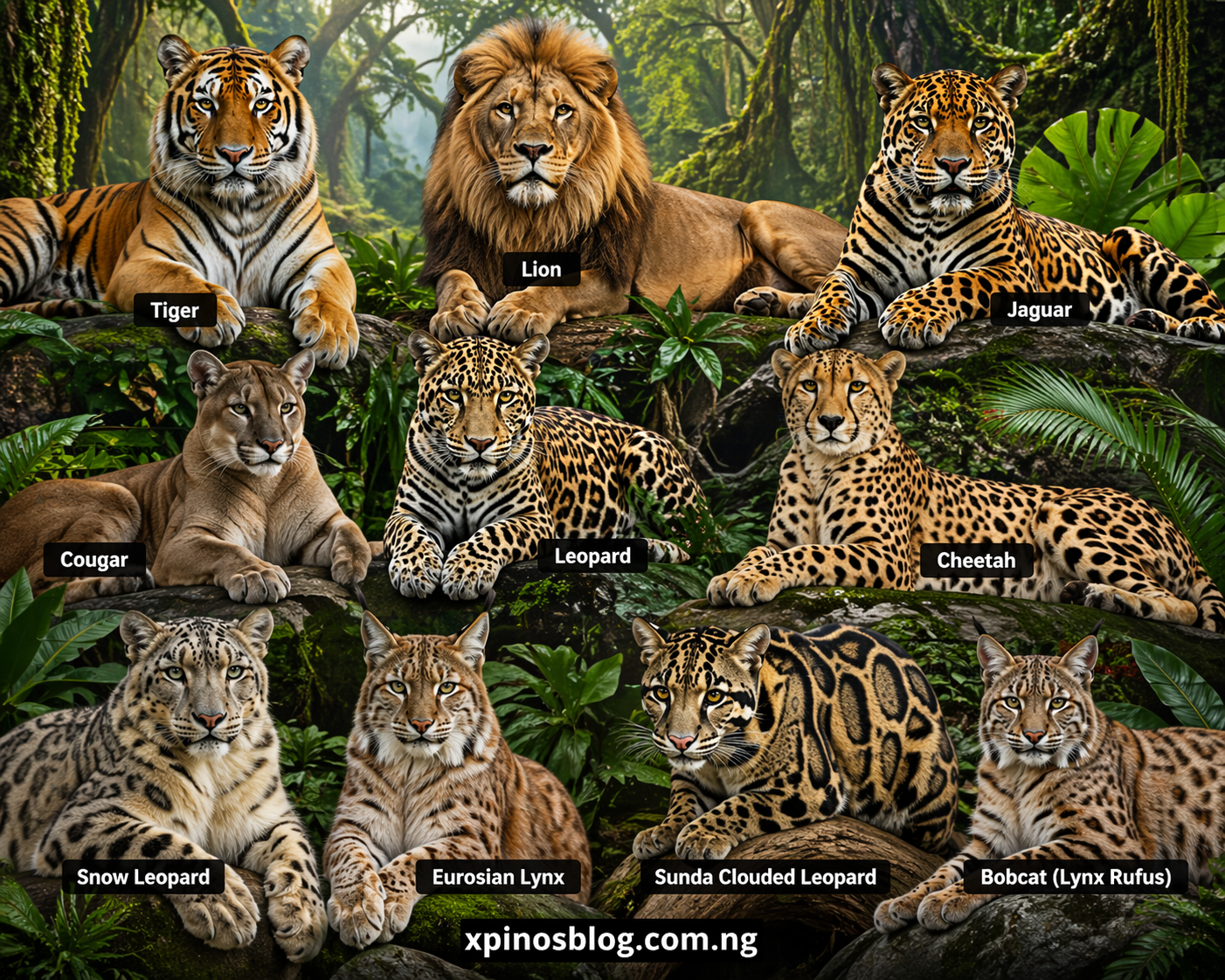
From the powerful roar of the Tiger to the ghost-like presence of the Snow Leopard, big cats are among the most fascinating and dominant predators on Earth. These incredible animals belong to the Felidae family and have evolved over millions of years into perfectly adapted hunters — combining strength, speed, stealth, and intelligence.
Across jungles, savannas, mountains, and forests, these cats play a crucial role in maintaining ecological balance. In this guide, we explore the 10 largest cats in the world, ranked by size, weight, and global presence.
🦁 1. Tiger
- Average weight: 90–265 kg (up to 317 kg for Siberian tigers)
- Length: 2.5–3.9 m
- Habitat: Asia (India, Russia, China)
The tiger is the undisputed heavyweight champion of the cat family. Known for its striking orange coat and black stripes, each tiger has a unique pattern—like a fingerprint. These solitary hunters rely on stealth and power, capable of taking down prey much larger than themselves. Despite their dominance, fewer than 4,000 remain in the wild, making conservation efforts critical.
🦁 2. Lion
- Average weight: 160–240 kg
- Length: 2.6–3.3 m
- Habitat: Africa and India
Often called the “King of the Jungle,” lions are the only truly social big cats. Living in prides, they demonstrate teamwork during hunts and territorial defense. Their deep, thunderous roar can be heard up to 8 kilometers away—one of the most iconic sounds in the wild.
🐆 3. Jaguar
- Average weight: 56–104 kg (up to 148 kg)
- Length: 1.8–2.7 m
- Habitat: Central and South America
The jaguar is a powerhouse of the Americas. Unlike most cats, it often kills prey with a direct bite to the skull. Strong swimmers and lovers of water, jaguars dominate wetlands and rainforests with unmatched confidence.
🐈 4. Cougar (Puma)
- Average weight: 53–71 kg (up to 105 kg)
- Length: 1.5–2.4 m
- Habitat: North and South America
Also known as mountain lions, cougars are among the most adaptable mammals in the world. Found from Canada to Chile, they thrive in deserts, forests, and mountains. Quiet and elusive, they rely on ambush tactics and powerful leaps.
🐆 5. Leopard
- Average weight: 30–65 kg (up to 108 kg)
- Length: 1.6–2.3 m
- Habitat: Africa, Asia, and parts of Europe
Leopards are masters of stealth and survival. Their ability to drag prey into trees keeps it safe from scavengers. With their beautiful rosette-patterned coats, they blend perfectly into their surroundings.
🐆 6. Cheetah
- Average weight: 36–54 kg
- Length: 1.5–2.3 m
- Habitat: Africa and Iran
Built for speed, the cheetah is the fastest land animal, reaching speeds of up to 120 km/h in short bursts. Unlike other big cats, it relies on speed rather than strength, making it a unique predator in the wild.
🐆 7. Snow Leopard
- Average weight: 30–39 kg (up to 54 kg)
- Length: 1.6–2.1 m
- Habitat: Central and South Asia
Nicknamed the “ghost of the mountains,” snow leopards are rarely seen. Their thick fur and long tail help them survive in freezing altitudes. They move silently across rocky terrain with incredible agility.
🐆 8. Eurasian Lynx
- Average weight: 17–22 kg (up to 45 kg)
- Length: 0.8–1.3 m
- Habitat: Europe and Asia
Recognizable by their tufted ears and short tails, Eurasian lynxes are skilled hunters that rely on patience and precision. They primarily hunt deer and small mammals in dense forests.
🐆 9. Sunda Clouded Leopard
- Average weight: 16–23 kg
- Length: 1.2–1.6 m
- Habitat: Borneo and Sumatra
This rare and mysterious cat is known for its cloud-like markings. It’s an expert climber, spending much of its life in trees. Despite its smaller size, it’s incredibly agile and efficient.
🐆 10. Bobcat
- Average weight: 6–18 kg (up to 22 kg)
- Length: 0.5–1.25 m
- Habitat: North America
The bobcat may be the smallest on this list, but it’s a highly adaptable predator. Found in forests, deserts, and even near urban areas, it survives by hunting rabbits, birds, and rodents.
🌍 Why These Big Cats Matter
Big cats are not just apex predators—they are ecosystem engineers. By controlling prey populations, they maintain balance in their habitats. When big cats disappear, ecosystems can collapse.
⚠️ Conservation Reality
Sadly, most of these species face serious threats:
- Habitat loss from deforestation
- Illegal poaching and wildlife trade
- Human-wildlife conflict
- Climate change
Conservation efforts such as protected reserves, anti-poaching patrols, and wildlife corridors are essential to ensure these majestic animals continue to roam the Earth.
From the dense jungles of Asia to the icy mountains of Central Asia, big cats remind us of nature’s raw power and beauty. Protecting them isn’t just about saving animals—it’s about preserving the balance of life on our planet.